
Martin County Three-Day Release Status
No MCSO page labeled “72-hour releases,” “recent releases,” or another rolling exit feed was verified. The county’s official-linked Tyler search is designed around a named person. A booking detail may show a Release date/time, facility, holds, charges, bond data, and identity information. It does not display or promise a complete list of every departure during the prior three calendar days.
A three-day check is therefore a method, not a published roster. Define the start and end of the period, search each known person, and compare the actual timestamp in the matching booking. If the goal is an agency-created list for stated dates, ask MCSO Records whether an existing commitment/release list or comparable record can be produced. Exemptions, redaction, available fields, and fees remain subject to the custodian’s records.
Check Martin County Weekend Releases
Set a clear interval before searching. A weekend review might begin with the first day in question and end after the third day, rather than using a vague phrase such as “over the weekend.” Record the local date and time shown for each named booking. This makes it possible to state that one person’s recorded departure falls within the interval without claiming that the portal supplied a complete three-day list.
- Identify Martin County Jail as the last known custodian. If the person was in state prison, use FDC instead.
- Open the official MCSO jail search bridge and follow the county booking-search link.
- Search the name in the Tyler Corrections Records Search and open the correct booking detail.
- Compare the populated Release date/time with the exact three-day interval. Check holds and facility data for transfer context.
- Call MCSO Booking at 772-220-7220 or Corrections at 772-220-7200 if the public entry is unclear or timing is recent.
- For a broader date-range record, use the MCSO request portal and state the start and end dates precisely.
Do not rely on a roster absence. The person may have left MCSO custody, transferred, or fallen outside the public display while the retained booking record still exists. The receiving agency must be checked when a disposition points elsewhere.
Martin County 72-Hour Release Fields
MCSO publishes no special field list for a 72-hour product. These are the confirmed fields associated with the named Tyler booking route and the additional facts that may need to be requested. They should not be described as columns in an official rolling feed.
| Field | Use in a three-day review |
|---|---|
| Subject name and identity | Matches the intended person to the correct booking. |
| Arrest date/time | Shows the intake event and prevents it from being confused with release. |
| Release date/time | Can place a named departure inside or outside the defined interval. |
| Facility and holds | Provides custody context and may point to another authority. |
| Charges and bond details | Explains booking context but does not prove physical departure. |
| Disposition or destination | May require the booking/release sheet or commitment/release paperwork. |
The strongest three-day result states what the source actually shows. If the Release date/time is absent, a blank should not be converted into “still in custody.” Call MCSO and request the retained document when the answer matters.
Note: Online display time and legal record retention are different, so an older entry may remain requestable after it vanishes from Tyler.
Martin County Weekend Release Limits
The longer interval is useful around Saturdays, Sundays, and observed holidays because it keeps more possible departure dates in view. It also gives a public-facing record more time to appear. Neither point establishes a release-feed cadence. MCSO does not publish how quickly Tyler changes after the jail completes a release.
MCSO does publish a separate rule for arrest affidavits: weekend or holiday uploads on the Recent Bookings page may be deferred until the next business day. That is an affidavit-publication rule for arrests. It cannot be applied to release data, and a delayed affidavit says nothing about the time someone physically left jail.
Martin County’s Reduced Custody Building houses weekend-sentence inmates. An authorized interval outside the facility during a weekend sentence is not necessarily final discharge. Confirm whether the entire custodial sentence ended. A recurring schedule can involve lawful departure and return without producing a completed release from the full sentence.
- Three-day interval
- A researcher-defined start and end period used to compare actual timestamps.
- Weekend sentence
- A custodial sentence served in scheduled segments rather than one unbroken stay.
- Final discharge
- Completion of the custody term, distinct from a temporary authorized exit.
Martin County Ten-Day Booking Split
Recent Bookings covers arrests during a 10-day period. It is not a three-day release list, even when a person shown there later leaves jail within the period being reviewed. The page can help identify an arrest date or affidavit. The departure must still be verified through the named Tyler detail, MCSO, or the retained release record.
The Tyler portal serves a different role. It allows a named booking to be opened and may populate Release date/time. Yet it advertises no release window and no retention guarantee. The two products must stay separate because one is a recent intake product and the other is a person-specific custody record interface.
The official capture of the MCSO Recent Bookings page shows the arrest-focused source that cannot be converted into a 72-hour exit list.
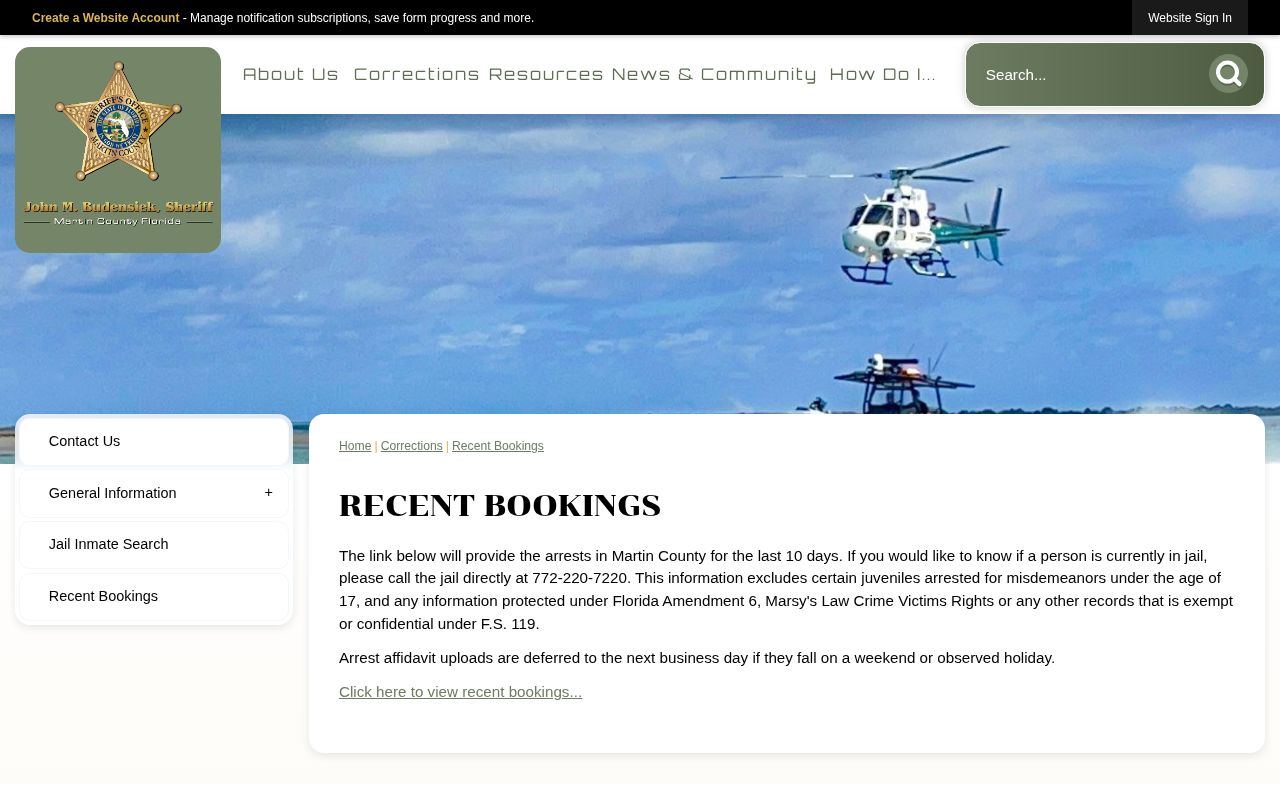
Its stated period concerns bookings, which is why the actual release field and records request remain necessary.
Request Martin County Three-Day Records
A precise date-range request is the closest durable fallback for the broad “who left during these three days” question. Ask whether MCSO holds an existing commitment/release list or comparable record for the stated range. Do not ask the custodian to build a new list or perform analysis. Specify whether the request seeks name, booking number, actual release date/time, releasing facility, and public release method or disposition.
Florida schedules recognize records associated with people booked or released within a 24-hour period, but a retention schedule does not mean MCSO publishes that list online. It also does not guarantee every requested field is public. Narrow dates reduce search and redaction work. Ask for native electronic delivery and a cost estimate before authorizing paid work.
The MCSO electronic request screen accepts a focused records description and provides tracking.
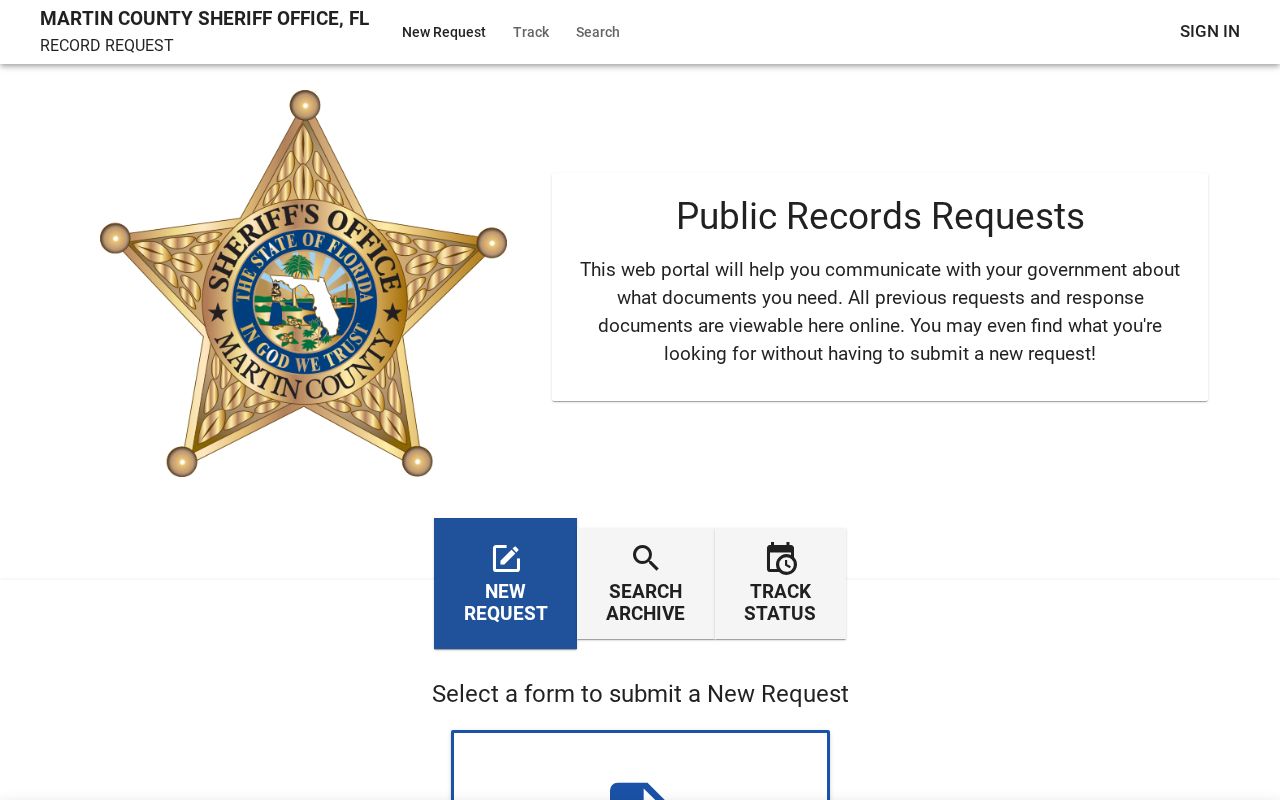
State the exact dates and avoid calling the requested agency record an existing public feed.
Note: Florida law requires a good-faith response, not a universal promise that every request will finish within three days.
Martin County Release Destinations
A county release timestamp records when MCSO relinquished its booking. It does not always mean return to the community. A transfer to FDC begins or continues state custody. Another county warrant can produce a jail-to-jail handoff. Federal or immigration pickup starts another custody path, and MCSO says immigration-hold information must be directed to ICE.
| Record clue | Next system |
|---|---|
| County release to community | MCSO release record plus court docket for continuing case terms. |
| Transfer to Florida corrections | FDC offender search by DC number or name. |
| Another county or federal pickup | The named receiving jail, federal custodian, or court record. |
| Participating VINE event | Confirm the alert with the agency named in the record. |
For the narrower same-day method, consult the Martin County 24-Hour Releases page. A named person whose custody history spans several systems can instead be traced through the home page’s custodian-first route.
Verify Martin County Three-Day Results
Preserve the source, search date, booking identifier, and exact field wording. “Release date/time” is a historical county custody fact when populated. “Arrest date/time” is not. A court case closed date is also different, and a projected state release date is an estimate rather than proof of a completed exit.
The county record answers when MCSO gave up custody. The court docket may explain the legal act behind it. FDC can confirm a state transfer or later state release, and VINELink may carry a participating event. No one source should be stretched beyond its population and purpose.
If the named booking conflicts with a direct agency response, request the existing release paperwork and identify the disputed field. That record-centered approach is more reliable than extending the date range again or assuming the online portal is a historical archive.
Note: Preserve the search time and exact field wording so a later portal change does not erase the basis for the result.